
QJamTracks Guitar Tutorials
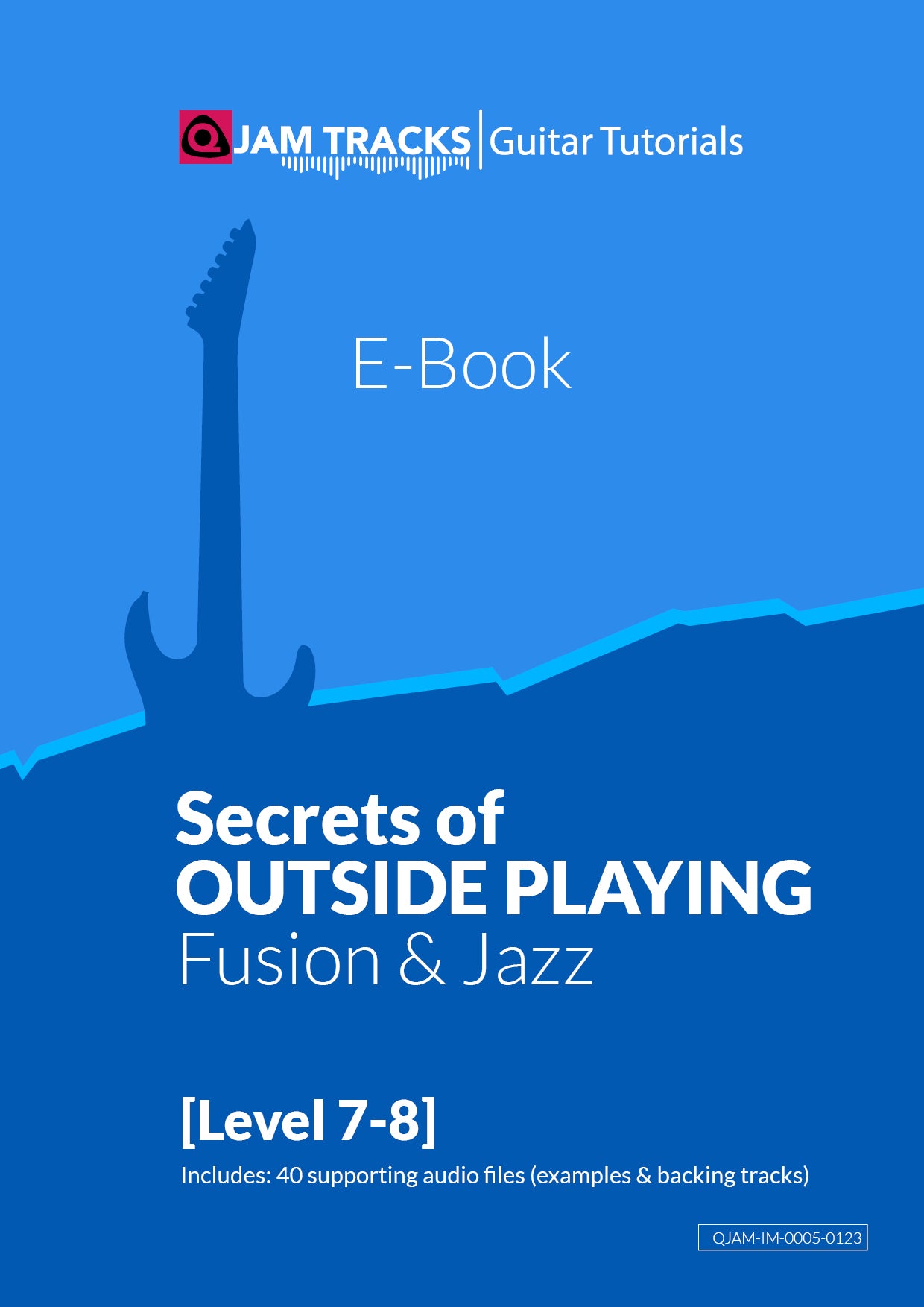
Secrets Of Outside Playing
Couldn't load pickup availability
In this e-book we'll learn that outside playing is using notes that are not part of the tonality of the chord or scale. As long as the tension resolves, it doesn’t really matter what outside notes you play. Still, there are proven methods that work for sure. The notes outside the beaten track are chosen from a wide collection of scales and arpeggios and with the context taken in account.
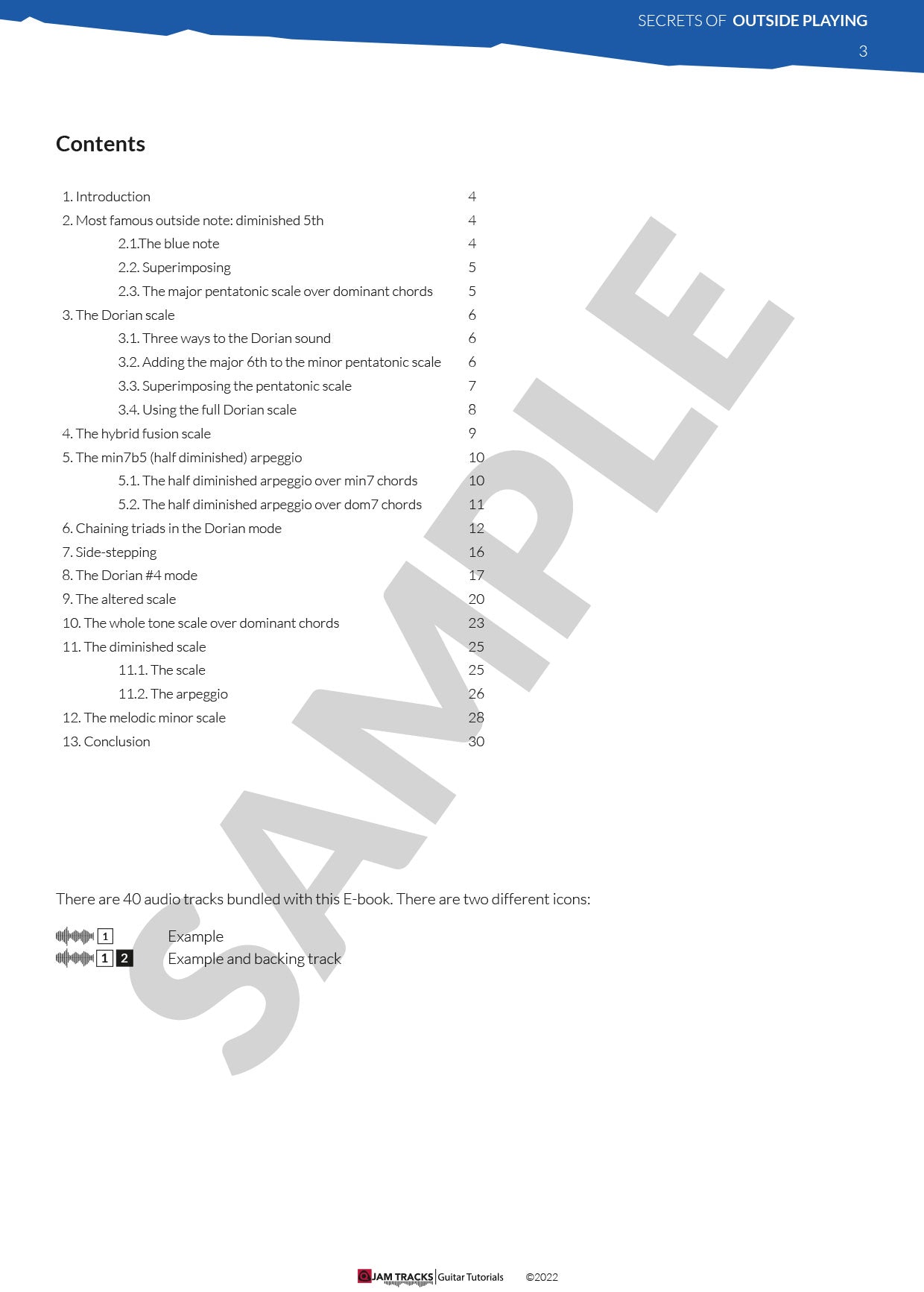
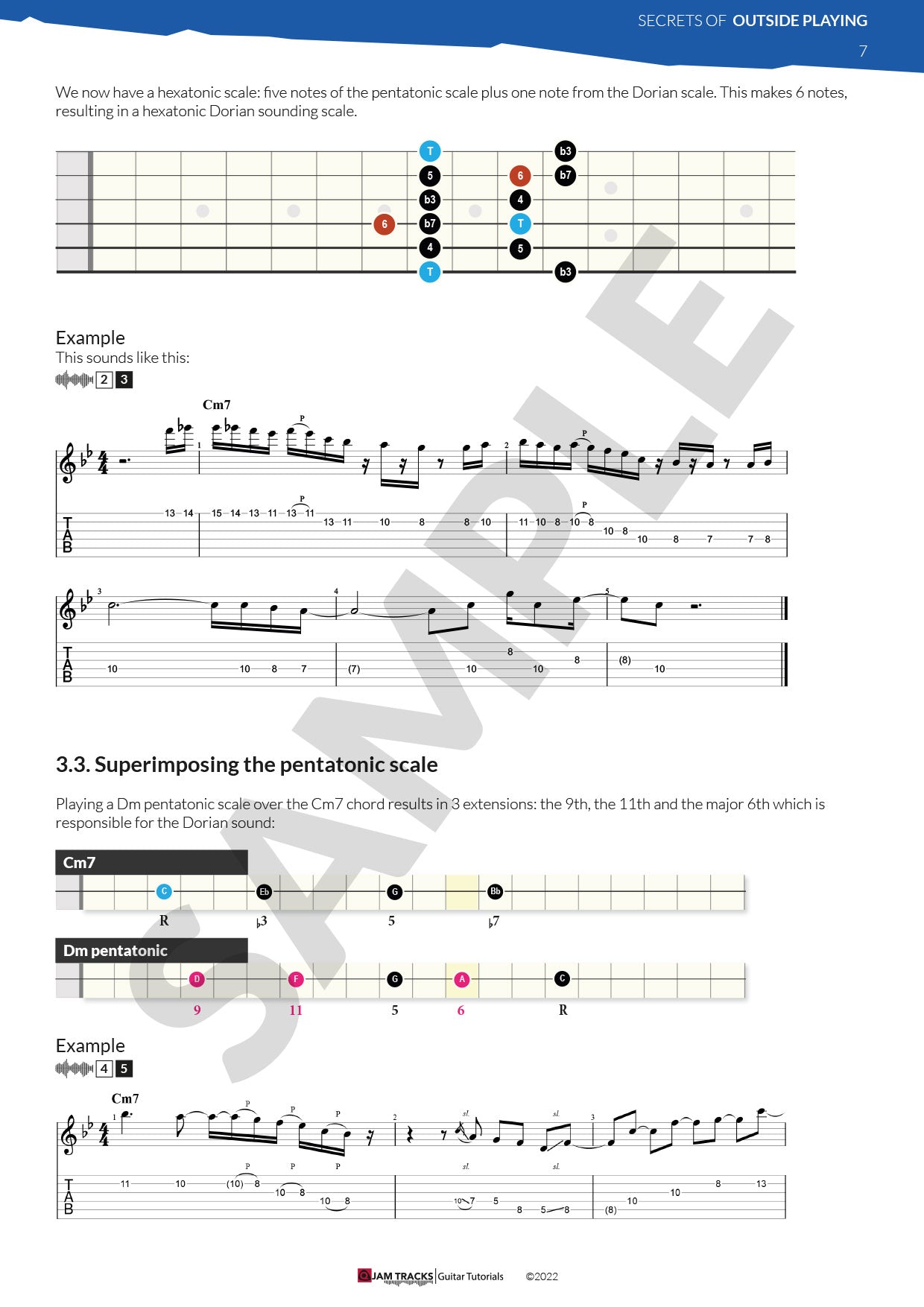
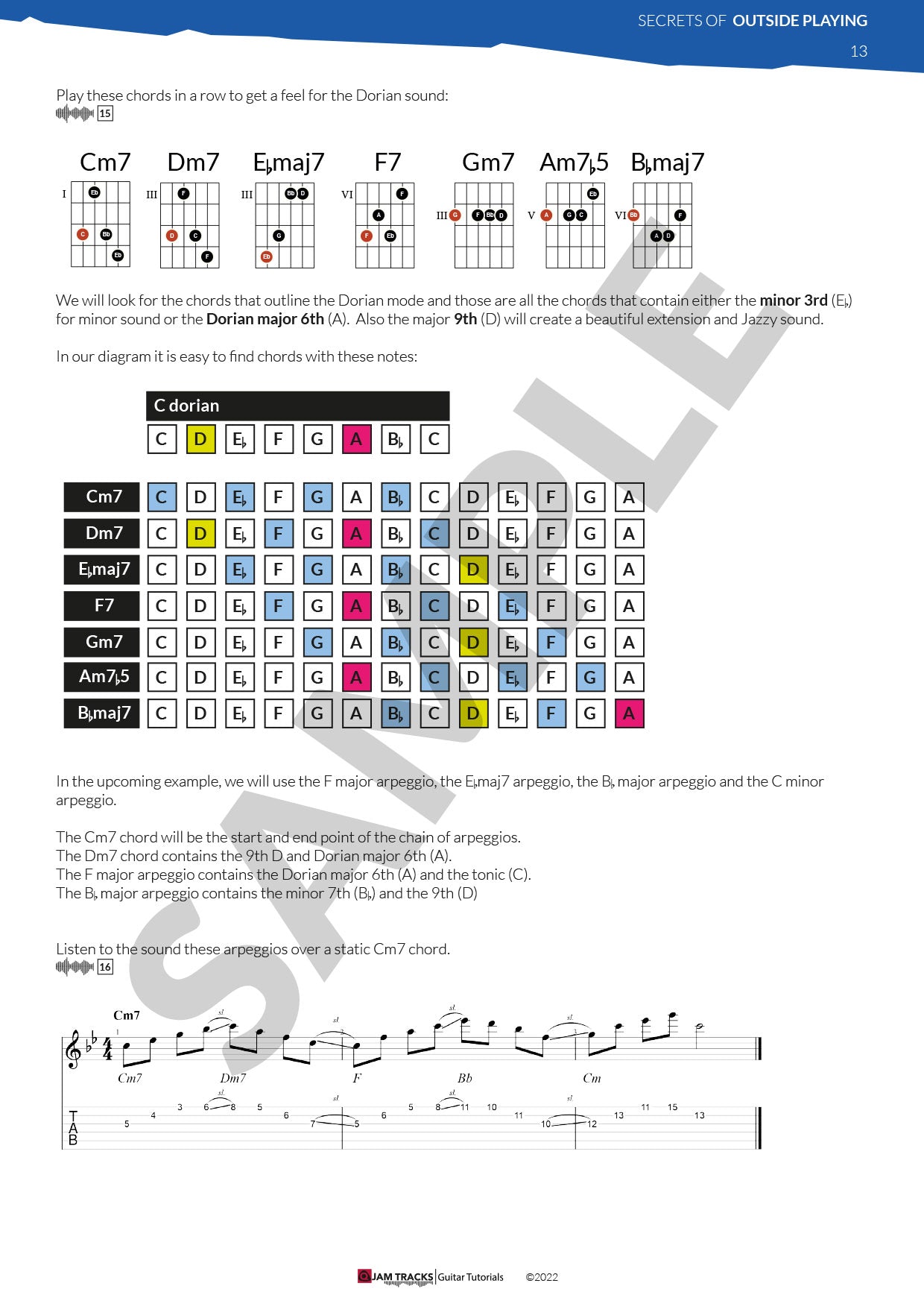
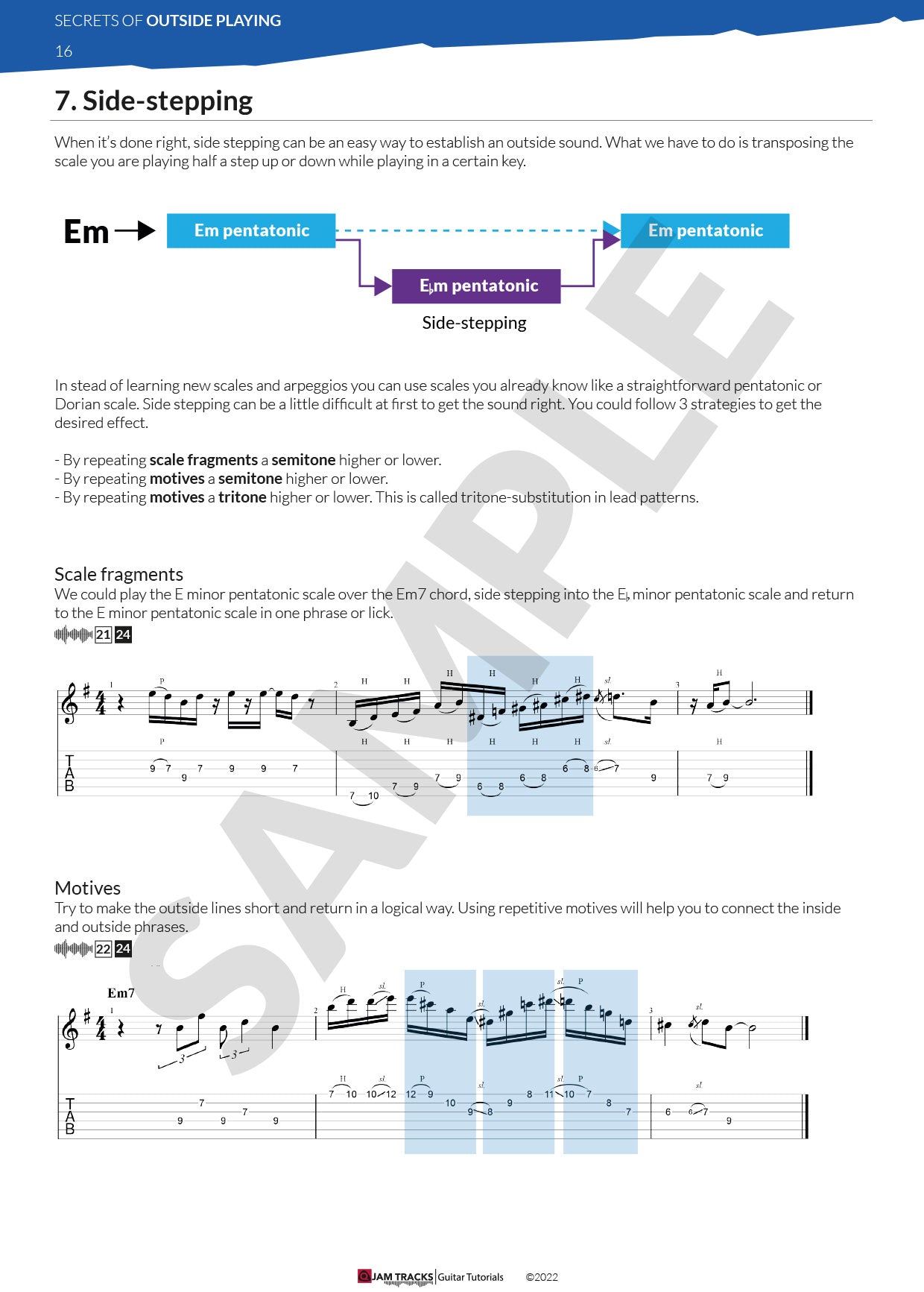
Outside Playing is used in Jazz and Fusion and can be established even with the simple blue note in the Pentatonic scale. In this e-book we going to look at a wide variety of scales and arpeggios like the Dorian mode, the hybrid fusion sale, the half diminished arpeggio or m7b5 arpeggio over minor and major chords. After this we look at chaining arpeggios and sidestepping, also known as side-stepping and sideslipping. Als the Dorian #4 is a good scale to use in this perspective, just like the altered scale, whole tone scale, melodic minor scale and diminished scale and diminished arpeggio.
Level: 7-8
Content pages: 27
Includes: 40 supporting audio tracks.
Book code: QJAM-IM-0005-0123
Book number:QJAM-IM-0005-0123
Share

I always enjoy Rob’s video lessons- so much useful information and ideas. The ebooks are a great way working through the material at my own pace. The price is also very reasonable!
Well laid out and clearly explained
Great explanation
I was looking for very specific information and I've found it right there!
I use the above mentioned book and "How to create progressive rock" in order to improve my skills on the guitar.
The topics are for advanced players - but when u know how chords are build, and how u can use different modes, u shouldn't have many problems with understanding that subject.
I have to admit that I use both books as my secondary literature as I sometimes need to catch up on theoretically things (enharmonic modulation, scale degree of different modes and so on).
The explanation isn't made for beginners in music theory because i suppose the author assumes that u already understand the things what he writes.
You should see the books more in a way like a source of "music hints" (in my opinion).
So, although I understand most of the topics after 1 week of studying, the books led me to dive deeper into the fusion genre - because that's exactly what i need.
To put it in a nutshell: To me, the books gave many ideas. So I bought other detailed books about Fusion in order to get more "color" on my ideas the books gave to me.
Advanced player may already get all the "color" by reading these books.
All in all totally worth to read!